The Transfiguration of Our Lord on Mount Tabor is one of the more mysterious events of the Gospels that can easily be overlooked, brushed over, minimised or misunderstood. It is mentioned in all 3 of the synoptic Gospels (Matthew 17:1-8, Mark 9:2-8, Luke 9:28-36), and also in the Letter of Peter (2 Peter 1:16-18). So it is an important and significant moment in scripture that we need to humbly and prayerfully meditate upon.
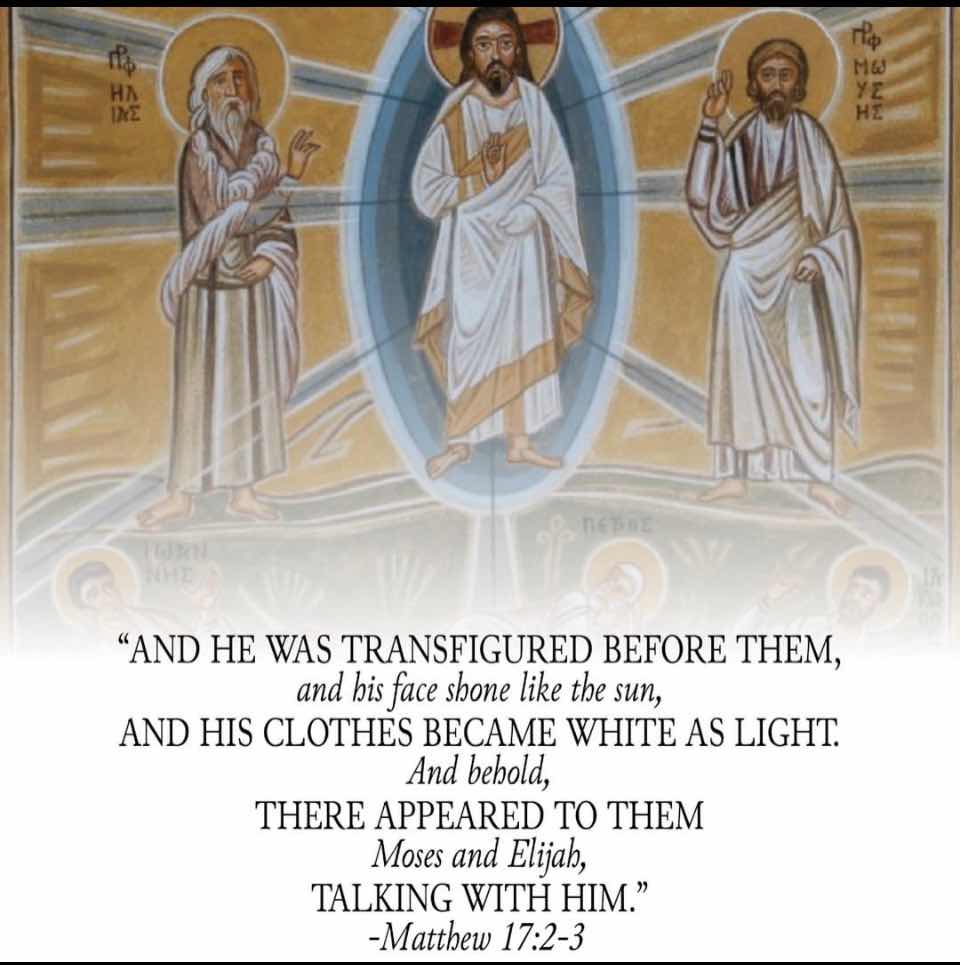
Usually there have been two interpretations of this event:
- One takes the theophany approach similar to when Jesus was baptised in the Jordan - where the voice of the Father says “this is my Beloved Son” and the Holy Spirit descends like a dove. This is a theophany - God manifesting and appearing. In this interpretation it is that Jesus’ Divinity is being manifested and it is a theophany of the Trinity revealing the identity of Jesus as also the Second Person of the Trinity. Linked in with this is the emphasis on Jesus manifesting his glory to the Apostles to strengthen and prepare them for the scandal of the crucifixion.
- The other approach is the typology/symbolic one that focuses on the presence of Moses & Elijah. This emphasises that Moses represents the Law, while Elijah represents the Prophets - and so the presence of them both is to demonstrate that Jesus himself is the fulfilment of both the Law & the Prophets in his very being. So it is seen as a confirmation of the ministry and message of Jesus as the promised Christ who fulfills the Law and also with the spirit of Elijah is inaugurating the end times as prophesied.
Both of these traditional interpretations are true and very beautiful. My intention is not to downplay them or invalidate them, but to deepen their power by highlighting another aspect of the Transfiguration.
As a Carmelite I have a special devotion to the theme of sacred mountains within scripture. This is one of the reasons I always felt attracted to the Carmelites, because of their connection to Mt Carmel and the Prophet Elijah. Scripture references multiple holy mountains as places of encounter with God or worship to God - Moriah, Sinai, Zion, Horeb, Carmel, Tabor, Calvary (Golgotha). There are also prophecies about worshiping God on his mountain in Isaiah 2:3 and the place of heavenly worship with the angels Hebrews 12:22.
According to tradition, the Mountain of the Transfiguration is called Mount Tabor. The deeper significance of the appearance of Moses and Elijah in this theophany can easily be overlooked. Not only are Moses & Elijah present with Jesus on Mount Tabor, but they are also talking with him. This is a significant detail, but why? The Gospel of Luke tells us that they are discussing his exodus - his departure to Jerusalem. Both Moses and Elijah also each had their own exodus when they travelled through the desert.
But there is also another deeper explanation that is not just symbolic, but says that Moses and Elijah talking with Jesus at the Transfiguration is linked to their own personal encounters with God on a mountain.
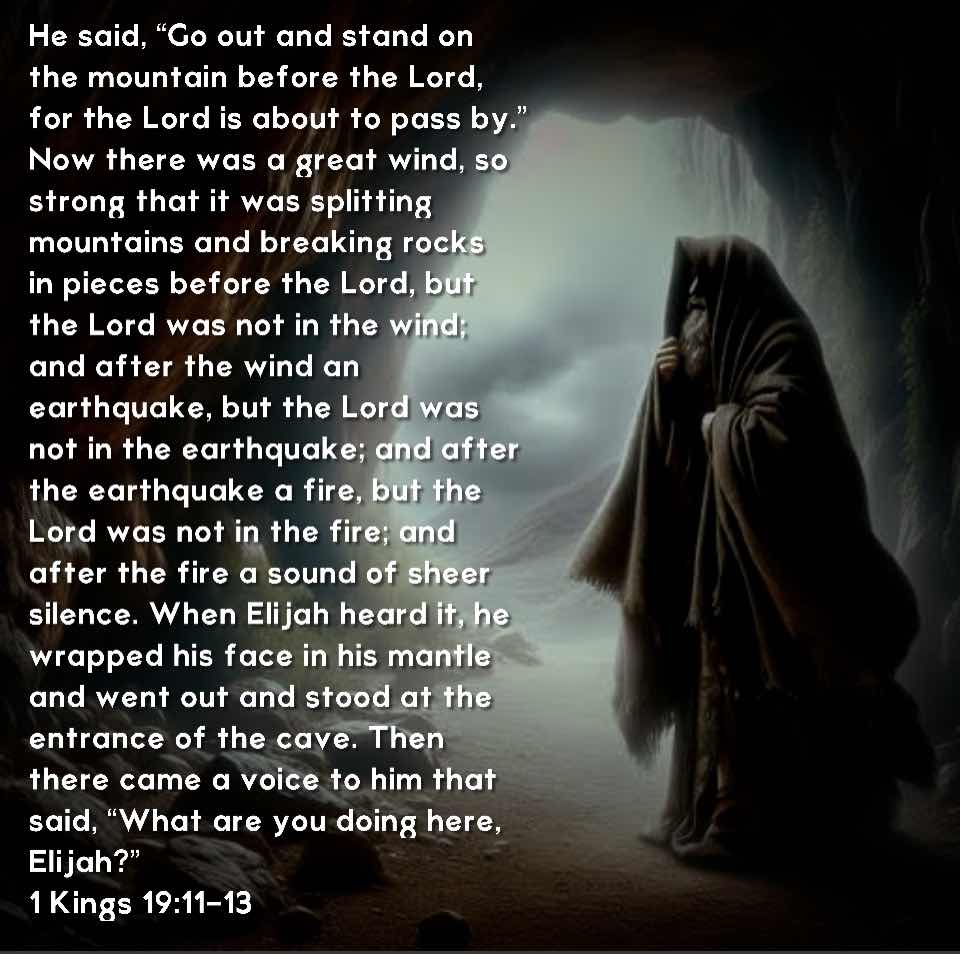
Both Moses & Elijah had a unique powerful encounter with God on a mountain, where the Lord manifested himself and spoke to them. The Lord manifested himself to Moses on Mount Sinai (Exodus 34:2-9, 27-28) and to Elijah on Mount Horeb (1 Kings 19: 11-18). Both of them cover their faces and bow in worship to the Lord when He manifests himself to them. This is because no one can see the Face of God and live (Exodus 33:20). But now in Jesus, we can see the Father because to see Jesus is to see the Father (John 14:9).
So what does this have to do with the Transfiguration? We often understand this event as Moses and Elijah being brought to Tabor and appearing with Jesus. So we assume this is a separate event in and of itself. But what if we understood it differently as not an isolated event… what if the event of the Transfiguration the the Apostles were witnessing was also the very moments when Moses & Elijah encountered the Lord? This would mean that the Apostles were witnessing the exact moments when the Lord spoke to Moses on Sinai and Elijah on Horeb simultaneously - all at once in the event of the Transfiguration! Thus witnessing that the Son who the Father is well pleased in, is the same one who partially manifested to Moses and Elijah, but is now fully manifested and revealed in the flesh as the Christ to the Apostles!
Understanding it this way makes the whole event come so much more alive for me. It connects the theophanies to Moses and Elijah and brings them to Christological fulfilment at the Transfiguration. I cannot claim that this is my own personal insight that I have discovered or invented, but I did hear it from someone else although I cannot remember where. I think I might have heard this from Dr Brant Pitre? But I am not entirely sure.
Either way, may this different perspective of the Transfiguration help you to enter deeper into the mystery of the Trinity and the saving power of the Word made Flesh - Immanuel (John 1:14), Our Lord Jesus Christ who will one day share with us His Glory (1 John 3:2, 2 Corinthians 3:18) and bring us face to face with God (Hebrews 1:3, 1 Corinthians 13:12).
The God who revealed himself to Moses in the Burning Bush and on Sinai through the Law, the God who revealed himself to Elijah in the breeze - is the same God now fully revealed and manifested to us in the Transfiguration and on Calvary. The God of Abraham, Issac & Jacob, the God of Moses and Elijah, Our Lord and God Jesus Christ is preparing for us the Heavenly Jerusalem on Mount Zion so that we will live forever in His Presence (Revelatiom 21:2-4) in eternal glory, where He dwells in His own inaccessible light (1 Timothy 6:16).
This is the ancient mystery kept secret but now revealed to us (Colossians 1:26-28), the First Born of all creation who is the Image of the Invisible Father (Colossians 1:15-19), has saved us from darkness and made us his coheirs to share in His Kingdom (Colossians 1:11-14) where the Lord himself will be our light (Revelation22:3-6). We share now but imperfectly, in this glorious mystery whenever celebrate the Sacrifice of the Eucharist - the Mystery of Faith (1 Corinthians 11:26) we proclaim at every Mass. The Risen Christ hidden and revealed to us in the Eucharist, fills us with the same light and glory He shares with the Father and the Holy Spirit (John 16: 12-15, John 17:1-26), that was magnificently shown to the Apostles at the Transfiguration.
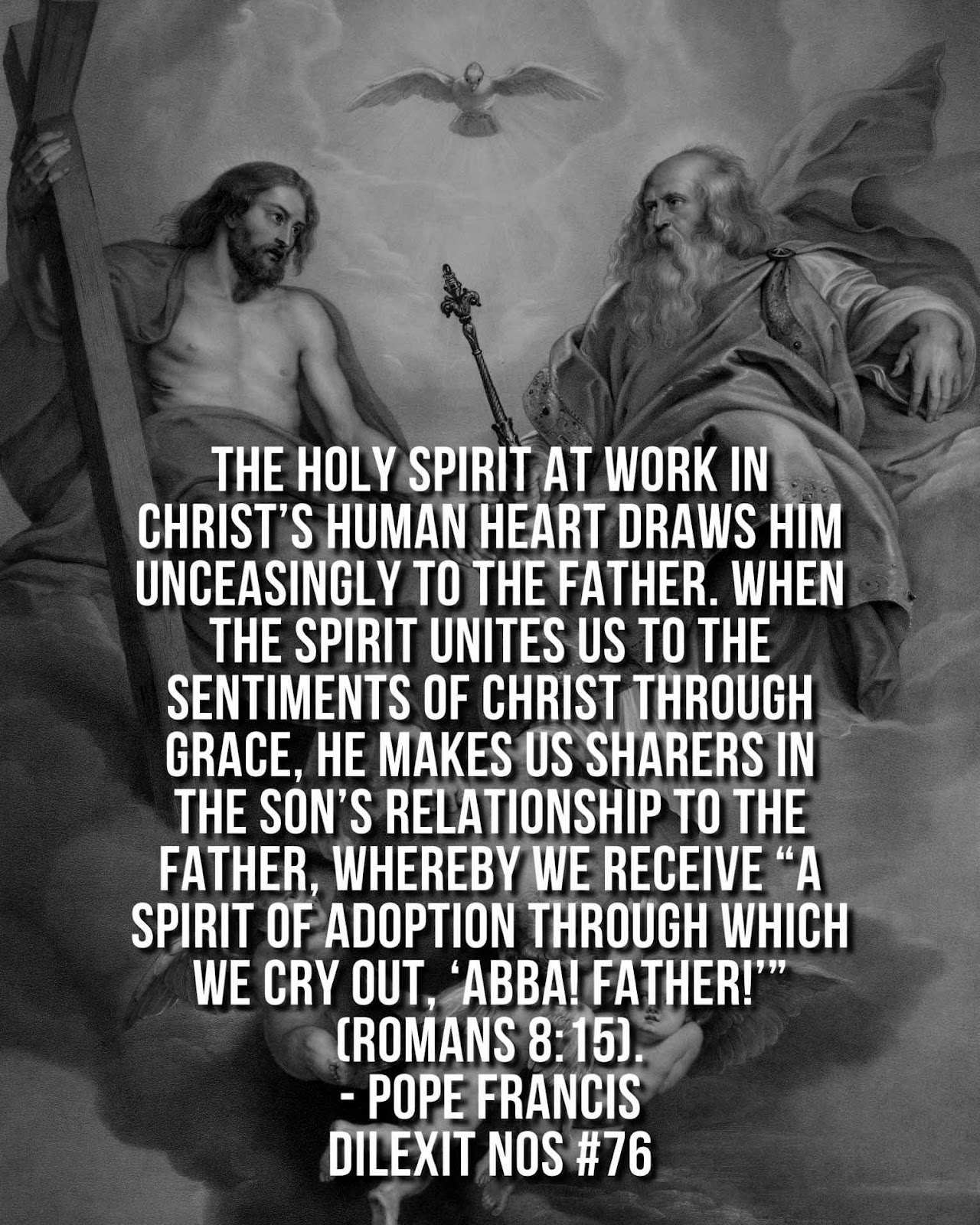
Jesus Christ is the total and complete revelation of God - the Holy Trinity - Father, Son & Holy Spirit. The mysterious theophanies of the Old Testament only make sense in light of the New Testament, because they were actually Christophanies - revealing the revelation of Christ that can only be understood and tasted in the Eucharist (Luke 24:13-35). The New and Eternal Covenant (Hebrews 13:20, Luke 22:20, Matthew 26:28, is the Light that enlightens the gentiles and gives glory to Israel (Luke 2:32) - the light of the Resurrection (Philippians 3:21) that was revealed briefly on Mount Tabor at the Transfiguration.