In preparation for his canonisation tomorrow, I wanted to share a post about one of our misunderstood and controversial popes.
Pope Paul VI was the last pope to wear the papal tiara, he continued the Second Vatican council which “reformed” the Church, he instituted the new ritual of the Roman Rite of the Mass called “Novus Ordo” and he wrote Humanae Vitae.
Whilst many abuses crept into the Church after the council, most of them are blamed personally on Pope Paul. I am not of the opinion that all of this is fair. Certainly the Chirch opened its windows to the spirit of the times in the 60’s and many abuses were done in the “spirit” of Vatican 2 even though they were not called for or even explicitly in the documents. Pope Benedict who was a periti at the Council has advised that the documents need to be read in a hermeneutic of continuity rather than a rapture.
I would like to leave you with this masterpiece by Pope St Paul VI called the Credo of the People of God, where he tried to correct and address certain theological errors that were taking sway.
PROFESSION OF FAITH
8. We believe in one only God, Father, Son and Holy Spirit, creator of things visible such as this world in which our transient life passes, of things invisible such as the pure spirits which are also called angels,(3) and creator in each man of his spiritual and immortal soul.
9. We believe that this only God is absolutely one in His infinitely holy essence as also in all His perfections, in His omnipotence, His infinite knowledge, His providence, His will and His love. He is He who is, as He revealed to Moses;(4) and He is love, as the apostle John teaches us:(5) so that these two names, being and love, express ineffably the same divine reality of Him who has wished to make Himself known to us, and who, "dwelling in light inaccessible,"(6) is in Himself above every name, above every thing and above every created intellect. God alone can give us right and full knowledge of this reality by revealing Himself as Father, Son and Holy Spirit, in whose eternal life we are by grace called to share, here below in the obscurity of faith and after death in eternal light. The mutual bonds which eternally constitute the Three Persons, who are each one and the same divine being, are the blessed inmost life of God thrice holy, infinitely beyond all that we can conceive in human measure.(7) We give thanks, however, to the divine goodness that very many believers can testify with us before men to the unity of God, even though they know not the mystery of the most holy Trinity.
The Father
10. We believe then in the Father who eternally begets the Son; in the Son, the Word of God, who is eternally begotten; in the Holy Spirit, the uncreated Person who proceeds from the Father and the Son as their eternal love. Thus in the Three Divine Persons, coaeternae sibi et coaequales,(8) the life and beatitude of God perfectly one superabound and are consummated in the supreme excellence and glory proper to uncreated being, and always "there should be venerated unity in the Trinity and Trinity in the unity."(9)
The Son
11. We believe in our Lord Jesus Christ, who is the Son of God. He is the Eternal Word, born of the Father before time began, and one in substance with the Father, homoousios to Patri,(10) and through Him all things were made. He was incarnate of the Virgin Mary by the power of the Holy Spirit, and was made man: equal therefore to the Father according to His divinity, and inferior to the Father according to His humanity;(11) and Himself one, not by some impossible confusion of His natures, but by the unity of His person.(12)
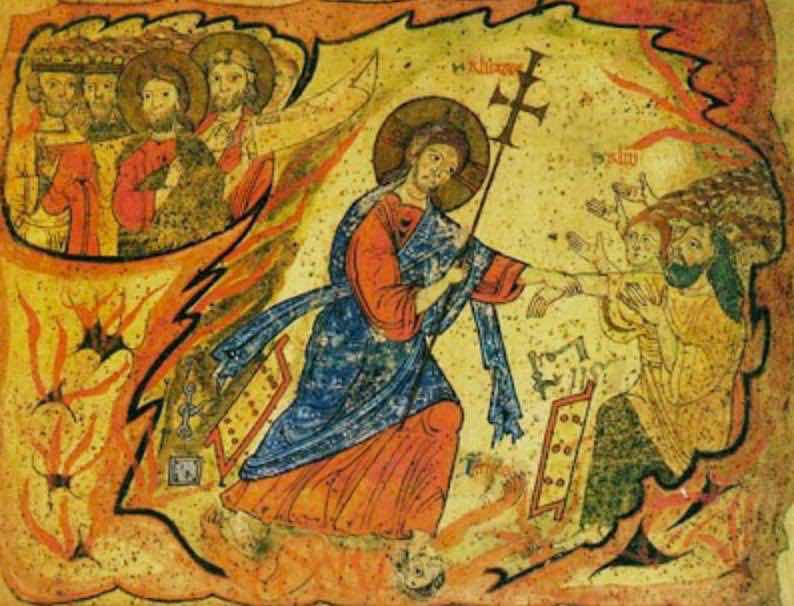
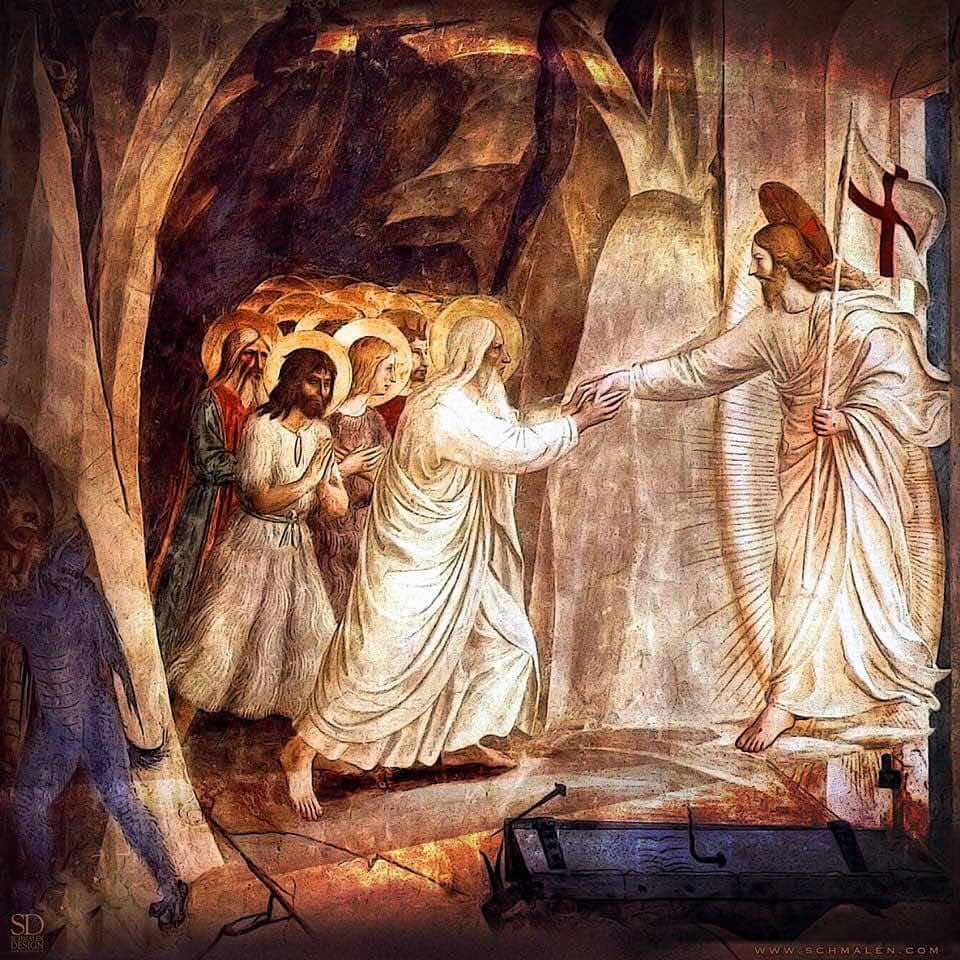
12. He dwelt among us, full of grace and truth. He proclaimed and established the Kingdom of God and made us know in Himself the Father. He gave us His new commandment to love one another as He loved us. He taught us the way of the beatitudes of the Gospel: poverty in spirit, meekness, suffering borne with patience, thirst after justice, mercy, purity of heart, will for peace, persecution suffered for justice sake. Under Pontius Pilate He suffered—the Lamb of God bearing on Himself the sins of the world, and He died for us on the cross, saving us by His redeeming blood. He was buried, and, of His own power, rose on the third day, raising us by His resurrection to that sharing in the divine life which is the life of grace. He ascended to heaven, and He will come again, this time in glory, to judge the living and the dead: each according to his merits—those who have responded to the love and piety of God going to eternal life, those who have refused them to the end going to the fire that is not extinguished.
And His Kingdom will have no end.
The Holy Spirit
13. We believe in the Holy Spirit, who is Lord and Giver of life, who is adored and glorified together with the Father and the Son. He spoke to us by the prophets; He was sent by Christ after His resurrection and His ascension to the Father; He illuminates, vivifies, protects and guides the Church; He purifies the Church's members if they do not shun His grace. His action, which penetrates to the inmost of the soul, enables man to respond to the call of Jesus: Be perfect as your Heavenly Father is perfect (Mt. 5:48).
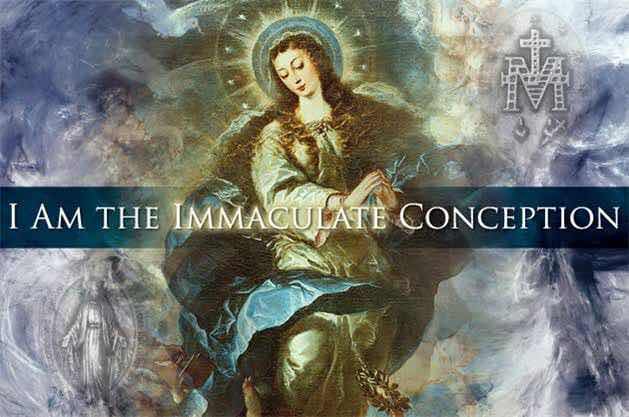
14. We believe that Mary is the Mother, who remained ever a Virgin, of the Incarnate Word, our God and Savior Jesus Christ,(13) and that by reason of this singular election, she was, in consideration of the merits of her Son, redeemed in a more eminent manner,(14) preserved from all stain of original sin(15) and filled with the gift of grace more than all other creatures.(16)
15. Joined by a close and indissoluble bond to the Mysteries of the Incarnation and Redemption,(17) the Blessed Virgin, the Immaculate, was at the end of her earthly life raised body and soul to heavenly glory(18) and likened to her risen Son in anticipation of the future lot of all the just; and we believe that the Blessed Mother of God, the New Eve, Mother of the Church,(19) continues in heaven her maternal role with regard to Christ's members, cooperating with the birth and growth of divine life in the souls of the redeemed.(20)
Original Offense
16. We believe that in Adam all have sinned, which means that the original offense committed by him caused human nature, common to all men, to fall to a state in which it bears the consequences of that offense, and which is not the state in which it was at first in our first parents—established as they were in holiness and justice, and in which man knew neither evil nor death. It is human nature so fallen, stripped of the grace that clothed it, injured in its own natural powers and subjected to the dominion of death, that is transmitted to all men, and it is in this sense that every man is born in sin. We therefore hold, with the Council of Trent, that original sin is transmitted with human nature, "not by imitation, but by propagation" and that it is thus "proper to everyone."(21)
Reborn of the Holy Spirit
17. We believe that o ur Lord Jesus Christ, by the sacrifice of the cross redeemed us from original sin and all the personal sins committed by each one of us, so that, in accordance with the word of the apostle, "where sin abounded, grace did more abound."(22)
Baptism
18. We believe in one Baptism instituted by our Lord Jesus Christ for the remission of sins. Baptism should be administered even to little children who have not yet been able to be guilty of any personal sin, in order that, though born deprived of supernatural grace, they may be reborn "of water and the Holy Spirit" to the divine life in Christ Jesus.(23)
The Church
19. We believe in one, holy, catholic, and apostolic Church, built by Jesus Christ on that rock which is Peter. She is the Mystical Body of Christ; at the same time a visible society instituted with hierarchical organs, and a spiritual community; the Church on earth, the pilgrim People of God here below, and the Church filled with heavenly blessings; the germ and the first fruits of the Kingdom of God, through which the work and the sufferings of Redemption are continued throughout human history, and which looks for its perfect accomplishment beyond time in glory.(24) In the course of time, the Lord Jesus forms His Church by means of the sacraments emanating from His plenitude.(25) By these she makes her members participants in the Mystery of the Death and Resurrection of Christ, in the grace of the Holy Spirit who gives her life and movement.(26) She is therefore holy, though she has sinners in her bosom, because she herself has no other life but that of grace: it is by living by her life that her members are sanctified; it is by removing themselves from her life that they fall into sins and disorders that prevent the radiation of her sanctity. This is why she suffers and does penance for these offenses, of which she has the power to heal her children through the blood of Christ and the gift of the Holy Spirit.
The Word
20. Heiress of the divine promises and daughter of Abraham according to the Spirit, through that Israel whose scriptures she lovingly guards, and whose patriarchs and prophets she venerates; founded upon the apostles and handing on from century to century their ever-living word and their powers as pastors in the successor of Peter and the bishops in communion with him; perpetually assisted by the Holy Spirit, she has the charge of guarding, teaching, explaining and spreading the Truth which God revealed in a then veiled manner by the prophets, and fully by the Lord Jesus. We believe all that is contained in the word of God written or handed down, and that the Church proposes for belief as divinely revealed, whether by a solemn judgment or by the ordinary and universal magisterium.(27) We believe in the infallibility enjoyed by the successor of Peter when he teaches ex cathedra as pastor and teacher of all the faithful,(28) and which is assured also to the episcopal body when it exercises with him the supreme magisterium.(29)
21. We believe that the Church founded by Jesus Christ and for which He prayed is indefectibly one in faith, worship and the bond of hierarchical communion. In the bosom of this Church, the rich variety of liturgical rites and the legitimate diversity of theological and spiritual heritages and special disciplines, far from injuring her unity, make it more manifest.(30)
One Shepherd
22. Recognizing also the existence, outside the organism of the Church of Christ, of numerous elements of truth and sanctification which belong to her as her own and tend to Catholic unity,(31) and believing in the action of the Holy Spirit who stirs up in the heart of the disciples of Christ love of this unity,(32) we entertain the hope that the Christians who are not yet in the full communion of the one only Church will one day be reunited in one flock with one only shepherd.
23. We believe that the Church is necessary for salvation, because Christ, who is the sole mediator and way of salvation, renders Himself present for us in His body which is the Church.(33) But the divine design of salvation embraces all men; and those who without fault on their part do not know the Gospel of Christ and His Church, but seek God sincerely, and under the influence of grace endeavor to do His will as recognized through the promptings of their conscience, they, in a number known only to God, can obtain salvation.(34)
Sacrifice of Calvary
24. We believe that the Mass, celebrated by the priest representing the person of Christ by virtue of the power received through the Sacrament of Orders, and offered by him in the name of Christ and the members of His Mystical Body, is the sacrifice of Calvary rendered sacramentally present on our altars. We believe that as the bread and wine consecrated by the Lord at the Last Supper were changed into His body and His blood which were to be offered for us on the cross, likewise the bread and wine consecrated by the priest are changed into the body and blood of Christ enthroned gloriously in heaven, and we believe that the mysterious presence of the Lord, under what continues to appear to our senses as before, is a true, real and substantial presence.(35)
Transubstantiation
25. Christ cannot be thus present in this sacrament except by the change into His body of the reality itself of the bread and the change into His blood of the reality itself of the wine, leaving unchanged only the properties of the bread and wine which our senses perceive. This mysterious change is very appropriately called by the Church transubstantiation. Every theological explanation which seeks some understanding of this mystery must, in order to be in accord with Catholic faith, maintain that in the reality itself, independently of our mind, the bread and wine have ceased to exist after the Consecration, so that it is the adorable body and blood of the Lord Jesus that from then on are really before us under the sacramental species of bread and wine,(36) as the Lord willed it, in order to give Himself to us as food and to associate us with the unity of His Mystical Body.(37)
26. The unique and indivisible existence of the Lord glorious in heaven is not multiplied, but is rendered present by the sacrament in the many places on earth where Mass is celebrated. And this existence remains present, after the sacrifice, in the Blessed Sacrament which is, in the tabernacle, the living heart of each of our churches. And it is our very sweet duty to honor and adore in the blessed Host which our eyes see, the Incarnate Word whom they cannot see, and who, without leaving heaven, is made present before us.
Temporal Concern
27. We confess that the Kingdom of God begun here below in the Church of Christ is not of this world whose form is passing, and that its proper growth cannot be confounded with the progress of civilization, of science or of human technology, but that it consists in an ever more profound knowledge of the unfathomable riches of Christ, an ever stronger hope in eternal blessings, an ever more ardent response to the love of God, and an ever more generous bestowal of grace and holiness among men. But it is this same love which induces the Church to concern herself constantly about the true temporal welfare of men. Without ceasing to recall to her children that they have not here a lasting dwelling, she also urges them to contribute, each according to his vocation and his means, to the welfare of their earthly city, to promote justice, peace and brotherhood among men, to give their aid freely to their brothers, especially to the poorest and most unfortunate. The deep solicitude of the Church, the Spouse of Christ, for the needs of men, for their joys and hopes, their griefs and efforts, is therefore nothing other than her great desire to be present to them, in order to illuminate them with the light of Christ and to gather them all in Him, their only Savior. This solicitude can never mean that the Church conform herself to the things of this world, or that she lessen the ardor of her expectation of her Lord and of the eternal Kingdom.
28. We believe in the life eternal. We believe that the souls of all those who die in the grace of Christ whether they must still be purified in purgatory, or whether from the moment they leave their bodies Jesus takes them to paradise as He did for the Good Thief are the People of God in the eternity beyond death, which will be finally conquered on the day of the Resurrection when these souls will be reunited with their bodies.
Prospect of Resurrection
29. We believe that the multitude of those gathered around Jesus and Mary in paradise forms the Church of Heaven where in eternal beatitude they see God as He is,(38) and where they also, in different degrees, are associated with the holy angels in the divine rule exercised by Christ in glory, interceding for us and helping our weakness by their brotherly care.(39)
30. We believe in the communion of all the faithful of Christ, those who are pilgrims on earth, the dead who are attaining their purification, and the blessed in heaven, all together forming one Church; and we believe that in this communion the merciful love of God and His saints is ever listening to our prayers, as Jesus told us: Ask and you will receive.(40) Thus it is with faith and in hope that we look forward to the resurrection of the dead, and the life of the world to come.
Blessed be God Thrice Holy. Amen.
PAUL VI